2026 Best Light Color for a Cozy Atmosphere?

Time:2026-10-13 Author:Ethan
0%

What color lighting creates a cozy atmosphere in 2026? The answer usually begins with warmth, not brightness. Soft amber and warm-white light between 2,200K and 3,000K can make a living room feel calmer. Think of a shaded table lamp beside a textured sofa, not a harsh ceiling fixture above it.

The Lighting Research Center identifies correlated color temperature as an important factor in visual comfort and perceived atmosphere. Its residential lighting guidance commonly supports warm sources for relaxed domestic spaces. The Illuminating Engineering Society also emphasizes layered lighting, controlled glare, and appropriate brightness for comfortable interiors. These principles matter more than color temperature alone. A 2,700K bulb can still feel unpleasant when it shines directly into your eyes.

Energy performance matters, too. The U.S. Department of Energy reports that residential LEDs use up to 75% less energy than incandescent lamps and can last about 25 times longer. Efficient does not have to feel clinical. Choose dimmable LEDs with high color rendering, then reduce brightness after sunset.

Dr. Mariana Figueiro, a leading lighting researcher, states, “Light is the most powerful synchronizer of the circadian system.” Her research primarily addresses biological timing, not cozy décor. Still, it offers a useful reminder: evening lighting affects more than appearance.

Warm light is not magic. Some rooms need clearer illumination. Personal preference changes everything. The best result may be slightly imperfect: a warm floor lamp, a dimmed wall sconce, and one darker corner left untouched. That contrast can make the room feel lived-in, quiet, and genuinely welcoming.
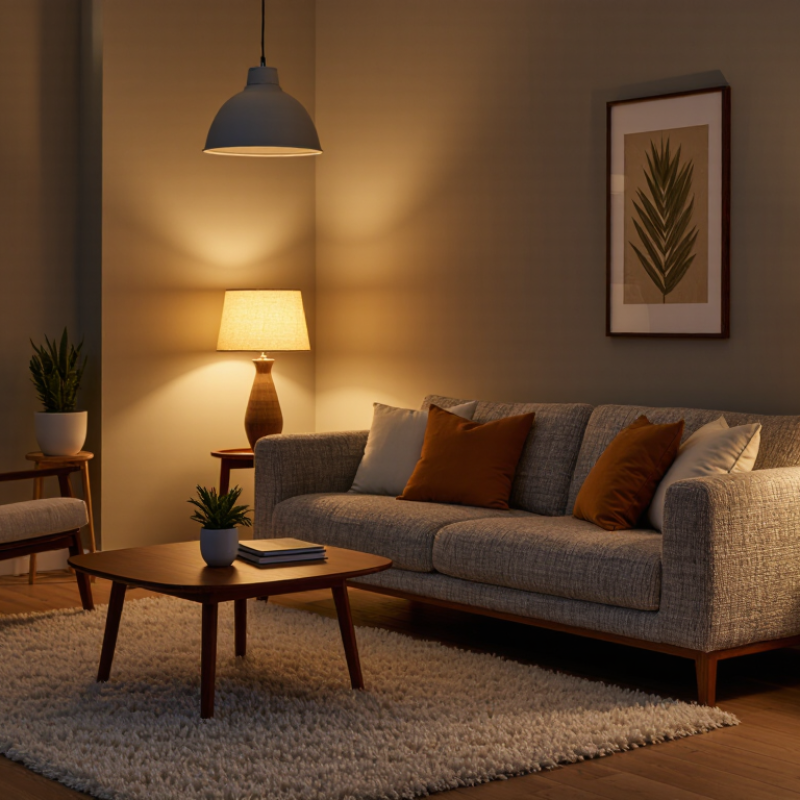
2026 Best Light Color for a Cozy Atmosphere?

What Light Color Means for a Cozy Atmosphere

What light color means for a cozy atmosphere is more nuanced than “warm equals comfortable.” Color temperature describes appearance, not the entire emotional effect. The ANSI C78.377 standard includes 2700K and 3000K as common warm-white categories. These tones can make wood, wool, and soft furnishings appear gentler. However, excessive brightness may still feel harsh, even at 2700K.

The CIE’s 2019 position statement recommends reducing short-wavelength light in the evening, supporting warmer and dimmer settings before sleep. The IES Lighting Handbook also treats illuminance as task-dependent, rather than offering one universal comfort level. For a living room, I would begin near 150–250 lux, then adjust by eye. Choose a color rendering index of 90 or higher for natural skin and fabric tones. ENERGY STAR’s lamp specification sets 80 as a minimum CRI, but minimum quality is not always the most convincing quality. The science is not perfectly tidy. A beautiful 3000K lamp can feel cozier than a poorly diffused 2700K lamp.

Tips: Use 2700K for lamps beside sofas and beds. Try 3000K where reading or cleaning matters. Dim the light gradually after sunset. Avoid placing one bright ceiling fixture above the entire room. Test samples against your walls, because paint can shift warm light toward yellow. I sometimes expect warmth to solve everything; it does not. Texture, shadows, and glare still shape the room.

2026 Best Light Color for a Cozy Atmosphere?

Warm light with a correlated color temperature (CCT) of about 1,800–3,000 K creates a softer, more intimate atmosphere. Lower Kelvin values appear warmer, while higher values look cooler and more energetic.

Recommended choice: Use 2,700–3,000 K for living rooms, bedrooms, dining areas, and other spaces intended to feel comfortable and relaxing. Candlelight is warmer, but it provides much less practical illumination.

How Warm Color Temperatures Affect Comfort and Mood

2026 Best Light Color for a Cozy Atmosphere?

Warm color temperatures, usually 2200K to 3000K, can make a room feel calmer and more intimate. Lower Kelvin light appears amber, like candlelight on a wooden table. Around 2700K often suits bedrooms, reading corners, and relaxed dining areas. It softens wall colors and reduces the stark feeling created by cool white light.

Comfort is not only visual. Light can also influence how alert or settled people feel during evening hours. In practical room comparisons, 3000K preserves useful detail without making the space feel clinical. A 2200K setting feels gentler after dinner, especially when lamps sit below eye level. Keep it indirect. Glare can ruin the mood quickly.

Individual response still matters. Some people find very warm light sleepy, while others dislike its yellow cast. I once preferred 2700K, then noticed that warm beige walls looked muddy at night. My first choice was not perfect. Testing a lamp for several evenings may reveal more than a color chart. Dim the brightness gradually, and check skin tones, text clarity, and floor shadows. A cozy room needs warmth, but it also needs enough light for safe, comfortable movement.

Choosing the Best Light Color for Each Room

2026 Best Light Color for a Cozy Atmosphere?

Choosing the Best Light Color for Each Room

Light color changes how a room feels, even when the furniture stays the same. For a cozy atmosphere, warm white light between 2700K and 3000K usually works well. It creates a soft glow, similar to candlelight, without making the room look orange. In my experience, 2700K feels especially comfortable in living rooms and bedrooms. Very warm light can feel dull, though. That depends on wall color and natural daylight.

Use 3000K in dining areas, hallways, and reading corners. It keeps skin tones natural while adding warmth. Kitchens often need 3500K to 4000K for clearer food preparation and safer cutting. Bathrooms may also benefit from 3500K light near mirrors. A warmer ceiling light can balance it. Avoid using one color everywhere. Rooms serve different purposes.

Tips: Choose dimmable fixtures when possible. Dim the living room after sunset. Keep task lights brighter than ambient lights. Check the light beside your actual furniture, not only in a showroom. High color rendering, preferably CRI 90 or above, helps fabrics and wood appear more natural. I once chose light that looked perfect on paper, but it felt cold beside gray walls. A small test bulb would have prevented that mistake. Lighting needs adjustment.

2026 Best Light Color for a Cozy Atmosphere? - Choosing the Best Light Color for Each Room

Practical color-temperature guidance for creating a comfortable, functional, and welcoming home.

Room or Area Recommended Color Temperature Light Appearance Suggested Brightness Why It Works
Living Room 2,700–3,000 K Warm white 1,500–3,000 lumens total Creates a relaxed, inviting atmosphere while providing enough light for reading and conversation.
Bedroom 2,200–2,700 K Soft warm white 1,000–2,000 lumens total The warmer tone feels calm and restful, especially when dimmed in the evening.
Dining Room 2,700–3,000 K Warm white 1,500–3,000 lumens total Adds warmth to meals and makes wood, fabric, and skin tones appear more comfortable.
Kitchen 3,000–4,000 K Warm to neutral white 3,000–7,000 lumens total Provides clearer visibility for food preparation without feeling as stark as cool daylight.
Bathroom 3,000–4,000 K Neutral white 2,000–4,000 lumens total Balances accurate visibility for grooming with a clean but still comfortable appearance.
Home Office 3,500–4,000 K Neutral to cool white 3,000–6,000 lumens total Supports visual clarity and concentration while avoiding the overly blue feel of very cool light.
Reading Nook 2,700–3,000 K Warm white 450–800 lumens for a task lamp Delivers focused light for text while preserving a cozy environment around the seating area.
Hallway and Entryway 2,700–3,000 K Warm white 500–1,500 lumens total Creates a welcoming transition between rooms and reduces the harshness of a brightly lit entrance.
Closet and Dressing Area 3,000–4,000 K Neutral white 1,000–2,500 lumens total Improves color recognition when selecting clothing while remaining comfortable in a small space.
Outdoor Covered Patio 2,700–3,000 K Warm white 800–2,000 lumens total Produces a pleasant evening glow and helps the outdoor area feel connected to the interior.
Quick guide: Lower Kelvin values look warmer and more golden, while higher Kelvin values look whiter or bluer. For the coziest atmosphere, choose warm white light around 2,700 K and use dimming or layered lighting to adjust the mood.

Balancing Brightness, Shadows, and Color Accuracy

2026 Best Light Color for a Cozy Atmosphere?

A cozy room needs more than warm bulbs. It needs controlled brightness, gentle shadows, and believable colors. In practical home tests, 2700K to 3000K light usually creates a calm evening mood. Lower brightness matters too. A warm lamp can still feel harsh when aimed directly at white walls. I prefer indirect light near the floor, with a softer source beside seating areas. Keep general lighting around 100 to 200 lux for relaxed conversation. However, comfort varies. My ideal setting may feel dull to someone who reads frequently.

Tips: Choose lighting with a color rendering index of 90 or higher. Check skin tones, wood grain, and food under the light. Use dimmers slowly, because small brightness changes can alter the room’s mood. Leave some corners darker. Perfect brightness can flatten the space.

Shadows give furniture depth, but sharp shadows often feel dramatic rather than welcoming. Frosted shades and reflected light soften edges without removing character. For accurate colors, avoid mixing strongly warm and cool sources in the same sightline. A warm ceiling light beside a blue-white desk lamp can make walls appear uneven. I sometimes break this rule for focused work. It is useful, but not beautiful. In 2026, adjustable color temperature can help rooms shift from lively daytime lighting to warmer evening tones. Still, controls should remain simple, or the setting becomes another daily task.

Setting Up Cozy Lighting for Different Times of Day

Cozy lighting changes with the clock, not just the room. In the morning, use soft neutral light around 3500–4500K near work areas. It can support alertness without feeling harsh. Place the light beside your face, not directly above it. This reduces shadows while you prepare breakfast or read messages. I once used a bright ceiling lamp too early. The room felt efficient, but not welcoming.

By late afternoon, lower the intensity and add warmer light around 2700–3000K. A table lamp beside a sofa can create a small pool of comfort. Keep the surrounding room slightly dimmer, but avoid strong contrast near stairs or doorways.

After dinner, warmer light around 2200–2700K often feels calmer. Use indirect lighting against a wall or behind furniture. Direct glare on a television or glossy table quickly breaks the mood. Small changes matter.

Tips: Use dimmers when possible, and adjust them gradually. Turn off one overhead light before adding another lamp. Check the room from seated eye level. Warm light can make wood look rich, but it may distort colors while cooking or choosing clothes. Test your setup for several evenings. My own preference keeps changing, which is useful to notice. A cozy room should feel comfortable, not perfectly staged.

FAQS

What light color creates a cozy atmosphere?

Warm white between 2700K and 3000K usually feels soft and comfortable. It resembles candlelight without making walls look strongly orange. Very warm light can seem dull in some rooms. Wall color and daylight change the result.

Which light color suits a living room or bedroom?

Try 2700K in living rooms and bedrooms. It creates a gentle glow around sofas, beds, and wooden furniture. Dim the light after sunset for a calmer feeling. My preference still changes sometimes.

What light color works well in dining areas and hallways?

Around 3000K adds warmth while keeping skin tones fairly natural. It suits dining tables, hallways, and reading corners. A small table lamp can make the space feel less flat. Small tests help.

Which light color is better for kitchens?

Kitchens often need 3500K to 4000K for clearer food preparation. Brighter neutral light helps you see ingredients and cutting surfaces. Warm lighting may make food colors look less accurate. Use task lighting near the worktop.

What light color is suitable for bathrooms?

Use around 3500K near bathroom mirrors for clearer facial details. A warmer ceiling light can soften the overall room. Place mirror lighting beside your face instead of directly above it. This reduces harsh shadows.

Should every room use the same light color?

No. Rooms have different purposes and visual needs. Bedrooms can use warmer light, while kitchens may need clearer neutral light. Using one color everywhere can make some areas feel uncomfortable. Matching each room is better.

How can lighting change from morning to night?

Use soft neutral light around 3500K to 4500K near work areas in the morning. Lower the intensity during late afternoon and choose 2700K to 3000K. After dinner, 2200K to 2700K can feel calmer. Indirect light behind furniture reduces glare.

How can I test whether a light feels right?

Test a bulb beside your actual furniture, walls, and flooring. Do not rely only on showroom displays. View the room from seated eye level for several evenings. Gray walls once made my chosen light feel unexpectedly cold. A small test would have helped.

Conclusion

Creating a cozy atmosphere begins with understanding how light color influences comfort, mood, and visual warmth. The key question is: what color lighting creates a cozy atmosphere? In most spaces, warm white light with a soft golden tone helps people feel relaxed and comfortable, while cooler light can feel more energetic and suitable for focused activities. Choosing the right color temperature for each room is important: warm lighting works well in bedrooms, living rooms, and dining areas, while slightly brighter neutral light may be useful in kitchens, bathrooms, or workspaces.

Cozy lighting also depends on brightness, shadows, and color accuracy. Overly bright light can reduce intimacy, while gentle layers of ceiling, wall, and accent lighting create depth and softness. During the day, brighter and more balanced illumination can support activity, while dimmer warm light in the evening encourages rest. By adjusting light color and intensity throughout the day, each room can feel inviting, practical, and naturally comfortable.

Ethan

Ethan

Ethan is a seasoned marketing professional with a deep expertise in our company's innovative product line. With a passion for sharing knowledge and insights, he takes the lead in regularly updating our corporate blog, where he explores industry trends, product features, and effective marketing......